Sale!
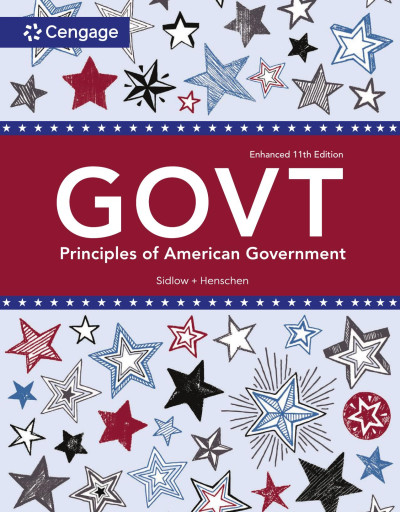
GOVT Enhanced 11th Edition by Edward Sidlow, ISBN-13: 978-0357795538
$50.00 Original price was: $50.00.$19.99Current price is: $19.99.
Description
NOTE: This book is a standalone book and will NOT include any access codes.
[PDF eBook eTextbook] – Available Instantly
- Publisher : Cengage Learning
- Publication date : January 13, 2023
- Edition : 11th
- Language : English
- ISBN-10 : 0357795539
- ISBN-13 : 978-0357795538
Learn on your terms with Sidlow/Henschen’s GOVT Enhanced, 11th Edition. Combining an easy-reference paperback or eBook with robust resources and an innovative online experience, GOVT Enhanced presents an accessible and concise overview of American government that equips you with anywhere, anytime learning tools. Reflecting the latest political and governmental developments, the 11th edition includes insightful coverage of the 2022 midterm elections, the Biden administration’s first two years, civil rights issues, recent Supreme Court decisions, liberty during the pandemic, diversity, equity and inclusion issues and more. In addition, you can enhance your understanding of course topics and maximize your success with Infuse or MindTap digital learning solutions.
Table of Contents:
Cover Page
Title Page
Copyright Page
Letter to Students
Skill Prep: A Study Skills Module
Take Action: A Guide to Political Participation
Part I. The Foundations of Our American System
1. America in the Twenty-First Century
Introduction
What Are Politics and Government?
Defining Politics and Government
Resolving Conflicts
Providing Public Services
Defending the Nation and Its Culture
Different Systems of Government
Undemocratic Systems
Democratic Systems
American Representative Democracy
The British Legacy
Principles of American Democracy
American Political Values
Political Values and a Divided Electorate
Political Values in a Changing Society
American Political Ideology
Conservatism
Liberalism
The Traditional Political Spectrum
Beyond Conservatism and Liberalism
Test Yourself
1: America in the Twenty-First Century
2. The Constitution
Introduction
The Beginnings of American Government
The First English Settlements
Colonial Legislatures
The Rebellion of the Colonists
“Taxation without Representation”
The Continental Congresses
Breaking the Ties: Independence
The Confederation of States
The Articles of Confederation
A Time of Crisis—The 1780s
Drafting and Ratifying the Constitution
Who Were the Delegates?
The Virginia Plan
The New Jersey Plan
The Compromises
Defining the Executive and the Judiciary
The Final Draft Is Approved
The Debate over Ratification
Ratification
Did a Majority of Americans Support the Constitution?
The Constitution’s Major Principles of Government
Limited Government, Popular Sovereignty, and the Rule of Law
The Principle of Federalism
Separation of Powers
Checks and Balances
Limited versus Effective Government
The Bill of Rights
Amending the Constitution
Test Yourself
2: The Constitution
3. Federalism
Introduction
Federalism and Its Alternatives
What Is Federalism?
Alternatives to Federalism
Federalism—An Optimal Choice for the United States?
The Constitutional Division of Powers
The Powers of the National Government
The Powers of the States
Interstate Relations
Concurrent Powers
The Supremacy Clause
The Struggle for Supremacy
Early United States Supreme Court Decisions
The Civil War—The Ultimate Supremacy Battle
Dual Federalism—From the Civil War to the 1930s
Cooperative Federalism and the Growth of the National Government
Federalism Today
The New Federalism—More Power to the States
The Supreme Court and the New Federalism
The Shifting Boundary between Federal and State Authority
The Fiscal Side of Federalism
Federal Grants
Federal Grants and State Budgets
Federalism and Economic Cycles
Using Federal Grants to Control the States
The Cost of Federal Mandates
Competitive Federalism
Test Yourself
3: Federalism
Part II. Our Liberties and Rights
4. Civil Liberties
Introduction
The Constitutional Basis for Our Civil Liberties
Safeguards in the Original Constitution
The Bill of Rights
The Incorporation Principle
Freedom of Religion
Laws on Religion in the Colonies
The Establishment Clause
Prayer in the Schools
Evolution versus Creationism
Aid to Parochial Schools
The Free Exercise Clause
Freedom of Expression
The Right to Free Speech Is Not Absolute
Subversive Speech
Limited Protection for Commercial Speech
Unprotected Speech
Free Speech for Students?
Deplatforming on Social Media
Freedom of the Press
The Right to Privacy
The Abortion Controversy
Do We Have the “Right to Die”?
Privacy and Personal Information
Personal Privacy and National Security
The Rights of the Accused
The Rights of Criminal Defendants
The Exclusionary Rule
The Miranda Warnings
Test Yourself
4: Civil Liberties
5. Civil Rights
Introduction
The Equal Protection Clause
Strict Scrutiny
Intermediate Scrutiny
The Rational Basis Test (Ordinary Scrutiny)
Black Americans
Separate but Equal
Violence and Vote Suppression
The Brown Decisions and School Integration
The Civil Rights Movement
Black Americans in Politics Today
Continuing Challenges
Women
The Struggle for Voting Rights
The Feminist Movement
Women in American Politics Today
Women in the Workplace
Securing Rights for Latinos, Native Americans, and Asian Americans
Latinos
Asian Americans
Native Americans
Persons with Disabilities
The LGBTQ+ Community
Beyond Equal Protection—Affirmative Action
Affirmative Action Tested
Strict Scrutiny Applied
The Diversity Issue
State Actions
Test Yourself
5: Civil Rights
Part III. The Politics of Democracy
6. Interest Groups
Introduction
Interest Groups and American Government
The Constitutional Right to Petition the Government
Why Interest Groups Form
How Interest Groups Function in American Politics
How Do Interest Groups Differ from Political Parties?
Different Types of Interest Groups
Business Interest Groups
Labor and Professional Interest Groups
Public Interest and Other Types of Groups
How Interest Groups Shape Policy
Direct Techniques
Indirect Techniques
Today’s Lobbying Establishment
Why Do Interest Groups Get Bad Press?
The Regulation of Lobbyists
The Lobbying Disclosure Act of 1995
Later Reform Efforts
Test Yourself
6: Interest Groups
7. Political Parties
Introduction
A Short History of American Political Parties
The First Political Parties
From 1796 to 1860
From the Civil War to the Great Depression
After the Great Depression
America’s Political Parties Today
Red States versus Blue States
Shifting Political Fortunes
The 2020 Elections
Realignment, Dealignment, and Tipping
What Do Political Parties Do?
Selecting Candidates and Running Campaigns
Informing the Public
Coordinating Policymaking
Checking the Power of the Governing Party
Balancing Competing Interests
How American Political Parties Are Structured
The Party in the Electorate
The Party Organization
The Party in Government
The Dominance of Our Two-Party System
The Self-Perpetuation of the Two-Party System
Third Parties in American Politics
The Effects of Third Parties
Test Yourself
7: Political Parties
8. Public Opinion and Voting
Introduction
How Do People Form Political Opinions?
The Importance of Family
Schools and Religious Institutions
The Media
Opinion Leaders
Major Life Events
Peer Groups
Economic Status and Occupation
Why People Vote as They Do
Party Identification and Ideology
Perception of the Candidates
Policy Choices
Socioeconomic Factors
Public Opinion Polls
Early Polling Efforts
How Polling Has Developed
Problems with Opinion Polls
Voting and Voter Turnout
Factors Affecting Voter Turnout
The Legal Right to Vote
Attempts to Improve Voter Turnout
Laws That May Discourage Voting
Attempts to Improve Voting Procedures
Who Actually Votes
Test Yourself
8: Public Opinion and Voting
9. Campaigns and Elections
Introduction
How We Elect Candidates
Conducting Elections and Counting the Votes
Presidential Elections and the Electoral College
How We Nominate Candidates
Party Control Over Nominations
A New Method: The Nominating Convention
Primary Elections and the Loss of Party Control
Nominating Presidential Candidates
The Modern Political Campaign
Responsibilities of the Campaign Staff
The Professional Campaign Organization
Opposition Research
The 2020 Campaign
The Internet Campaign
Fundraising on the Internet
Targeting Supporters
Support for Organizing
What It Costs to Win
Presidential Spending
The Federal Election Campaign Act
Skirting the Campaign Financing Rules
The Bipartisan Campaign Reform Act of 2002
The Current Campaign Finance Environment
Test Yourself
9: Campaigns and Elections
10. Politics and the Media
Introduction
The Role of the Media in a Democracy
Media Characteristics
The Changing Media
The Media and the First Amendment
The Agenda-Setting Function of the Media
The Medium Does Affect the Message
Ownership of the Media
The Candidates and Television
Political Advertising
Television Debates
News Coverage
“Popular” Television
Talk Radio—The Wild West of the Media
Audiences and Hosts
The Impact of Talk Radio
The Question of Media Bias
Partisan Bias
The Bias Against Losers
A Changing News Culture
Political News and Campaigns on the Web
News Organizations Online
Blogs, Podcasts, and Citizen Journalism
Tweets, Facebook Posts, Fake News, and Deplatforming
Cyberspace and Political Campaigns
Test Yourself
10: Politics and the Media
Part IV. Institutions
11. The Congress
Introduction
The Structure and Makeup of Congress
Apportionment of House Seats
Congressional Districts
The Representation Function of Congress
Congressional Elections
Who Can Be a Member of Congress?
The Power of Incumbency
Congressional Terms
Congressional Leadership, the Committee System, and Bicameralism
House Leadership
Senate Leadership
Congressional Committees
The Differences between the House and the Senate
The Legislative Process
The Regular Order
Investigation and Oversight
The Investigative Function
Impeachment Power
Senate Confirmation
The Budgeting Process
Authorization and Appropriation
The Actual Budgeting Process
Test Yourself
11: The Congress
12. The Presidency
Introduction
Who Can Become President?
Why Would Anyone Want to Be President?
Presidential Age and Occupation
Race, Gender, and Religion
The President’s Many Roles
Chief Executive
Commander in Chief
Head of State
Chief Diplomat
Chief Legislator
Political Party Leader
Presidential Powers
The President’s Constitutional Powers
The President’s Inherent Powers
The Expansion of Presidential Powers
Congressional and Presidential Relations
Advantage: Congress
Advantage: The President
The Organization of the Executive Branch
The President’s Cabinet
The Executive Office of the President
The Vice Presidency and Presidential Succession
Test Yourself
12: The Presidency
13. The Executive Branch
Introduction
The Nature and Size of the Bureaucracy
The Nature of Bureaucracy
The Growth of Bureaucracy
The Costs of Maintaining the Government
Where Does All the Money Go?
How the Federal Bureaucracy Is Organized
The Executive Departments
A Typical Departmental Structure
Independent Executive Agencies
Independent Regulatory Agencies
Government Corporations
How Bureaucrats Get Their Jobs
The Civil Service
Origins of the Merit System
Regulatory Agencies
Agency Creation
Rulemaking
Policymaking
Curbing Waste and Improving Efficiency
Whistleblowers
Improving Efficiency and Getting Results
Another Approach—Pay-for-Performance Plans
Privatization
Government in the Sunshine
Government Online
Test Yourself
13: The Executive Branch
14. The Judiciary
Introduction
The Origins and Sources of American Law
The Common Law Tradition
Primary Sources of American Law
Civil Law and Criminal Law
Basic Judicial Requirements
The Federal Court System
U.S. District and Specialized Courts
U.S. Courts of Appeals
The United States Supreme Court
Federal Judicial Appointments
The Nomination Process
Confirmation or Rejection by the Senate
The Courts As Policymakers
The Issue of Broad Language
The Power of Judicial Review
Judicial Activism vs. Judicial Restraint
Ideology and the Courts
Ideology and Today’s Supreme Court
Approaches to Legal Interpretation
Assessing the Role of the Federal Courts
Criticisms of the Federal Courts
The Case for the Courts
Test Yourself
14: The Judiciary
Part V. Public Policy
15. Domestic Policy
Introduction
The Policy-Making Process
Issue Identification and Agenda Setting
Policy Formulation and Adoption
Policy Implementation
Policy Evaluation
Policy Making and Special Interests
Health Care Policy
Two Problems with U.S. Health Care
Medicaid and Medicare
The Democrats Propose Universal Coverage
Energy and the Environment
The Problem of Imported Oil
Climate Change
New Energy Sources
Economic Policy and Taxes
The Goals of Economic Policy
Monetary Policy
Fiscal Policy
The Federal Tax System
The Public Debt
Test Yourself
15: Domestic Policy
16. Foreign Policy
Introduction
Who Makes U.S. Foreign Policy?
The President’s Role
The Cabinet
Other Agencies
Powers of Congress
A Short History of American Foreign Policy
Isolationism
The Beginning of Interventionism
The World Wars
The Cold War
Post–Cold War Foreign Policy
Problems Requiring the Use of Force
The Problem of Terrorism
The U.S. Response to 9/11—The War in Afghanistan
The Focus on Iraq
Again, Afghanistan
The Civil War in Syria and the Growth of ISIS
Diplomacy in an Unstable World
The Israeli–Palestinian Conflict
The Abraham Accords
Weapons of Mass Destruction
Continuing Provocations
China—The Next Superpower?
Chinese Military Actions on the Horizon?
Test Yourself
16: Foreign Policy
Appendix A. The Declaration of Independence
Appendix B. The Constitution of the United States
Appendix C. Federalist Papers No. 10 and No. 51
Edward I. Sidlow is a professor of political science at Eastern Michigan University and EMU’s faculty representative to the NCAA. He teaches broadly in the area of American politics and has published two books on Congress in addition to numerous articles in professional journals. Prior to his work at EMU, Dr. Sidlow served on the faculties of Arizona State University, Miami University in Ohio and Northwestern University, and he was an academic administrator at Loyola University Chicago. The recipient of awards for outstanding teaching at Miami, Northwestern and EMU, Dr. Sidlow is often called upon by print and electronic media for political analysis. He received his Ph.D. from The Ohio State University in 1979.
Beth Henschen was a faculty member in the departments of political science at Purdue University and Loyola University Chicago before joining the faculty at Eastern Michigan University. The recipient of several awards for teaching excellence, she teaches courses in American government, judicial politics, and civil rights and liberties. Dr. Henschen’s articles have appeared in numerous professional journals, including the AMERICAN POLITICAL SCIENCE REVIEW, AMERICAN POLITICS QUARTERLY, LEGISLATIVE STUDIES QUARTERLY, JUDICATURE, POLITICAL RESEARCH QUARTERLY PUBLIC INTEGRITY and REVIEW OF POLICY RESEARCH. She received her Ph.D. from The Ohio State University.
What makes us different?
• Instant Download
• Always Competitive Pricing
• 100% Privacy
• FREE Sample Available
• 24-7 LIVE Customer Support